
One of the most dangerous assumptions in veterinary care is that normal bloodwork equals the absence of serious disease.
It does not.
The Rule: Bloodwork is not enough.
Gallbladder mucoceles often do not present clearly on routine blood panels in early or even mid-stage development.
Liver enzymes may be:
- mildly elevated
- intermittently elevated
- or, in some cases, still within range
This creates a false sense of security.
You are told:
- “Everything looks okay.”
- “Let’s monitor.”
- “Nothing urgent right now.”
And time passes.
But mucoceles are structural.
They are not fundamentally blood abnormalities.
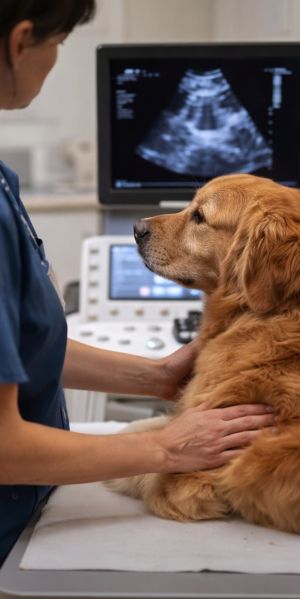
They are physical changes in the gallbladder, and those changes are best seen through imaging — specifically, ultrasound.
Gabby’s condition would not have been confirmed through bloodwork alone.
And that is the point.
What to Know
- Gallbladder mucoceles = diagnosed via ultrasound, not bloodwork
- Bloodwork may lag behind actual disease progression
- Waiting for lab abnormalities can delay intervention
What To Do
- If symptoms persist or a pattern emerges → request an abdominal ultrasound explicitly
- Do not accept “normal bloodwork” as a full answer
- Ask directly:
- “Can we rule out gallbladder disease?”
- “Should we image to be sure?”
Early detection is often the difference between:
- surgical management with a good prognosis
- and emergency rupture with significantly worse outcomes