
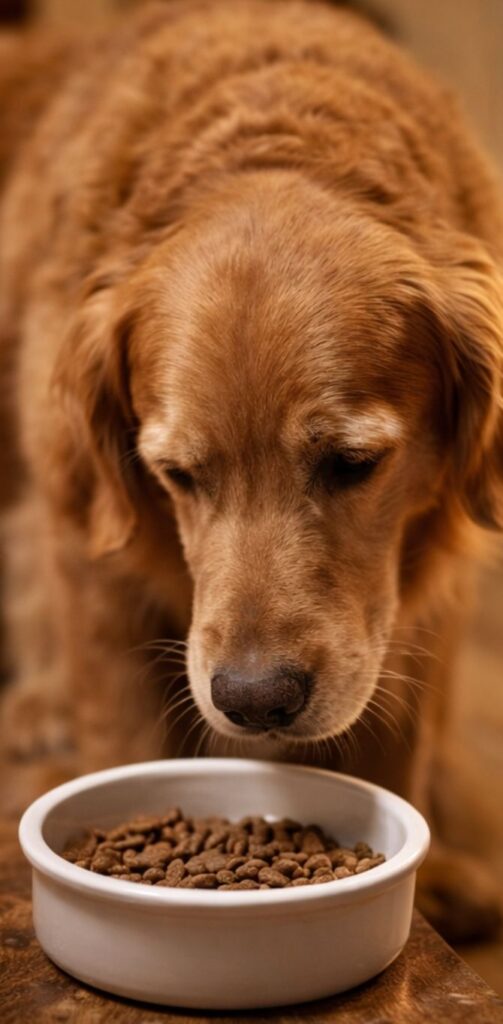
We tend to interpret appetite emotionally.
“He’s just not hungry.”
“He’s being picky.”
“He’ll eat later.”
And sometimes, that’s true. But often, it isn’t.
The Rule: Appetite is data, not preference.
In dogs, appetite is one of the earliest and most reliable indicators of internal disruption.
Not because dogs are food-driven. But because they are consistent.
A deviation from that consistency is information.
Gallbladder disease frequently affects appetite early due to:
- nausea
- discomfort
- impaired digestion
But these effects can be mild at first.
Not enough to stop eating entirely.
Just enough to reduce interest.
And that subtle reduction is where intervention should begin.
Gabby’s appetite likely told part of the story.
Not dramatically.
But clearly enough — in hindsight.
What to Watch For
- Leaving food behind when it is normally consistent
- Hesitation before eating
- Eating less but still accepting treats
- Fluctuating appetite over days
What To Do
- Track intake — not just “ate/didn’t eat,” but how much vs normal
- Treat any sustained change (>24 hours) as clinical, not behavioral
- Combine appetite data with:
- energy levels
- behavior changes
And escalate accordingly.